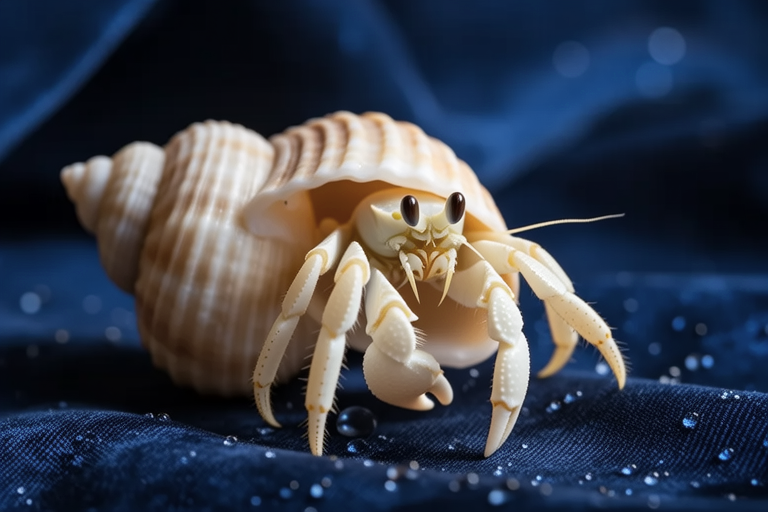
Meet the Tiniest Crab That Lives Inside Mollusks: The Pea Crab
In the vast and diverse underwater world, one might imagine that all creatures live independently. However, there exists a fascinating group of crustaceans that have adapted to living inside mollusks – the pea crabs. These tiny crabs, barely larger than a grain of rice, lead a unique existence within their hosts. This article delves into the intriguing life of the pea crab, exploring its habitat, physical attributes, and its symbiotic relationship with its host.
The Unique Habitat of the Pea Crab
Pea crabs are among the smallest true crabs in the world, with some species measuring less than half an inch in length. Their habitat is as unique as they are: the interior of bivalve mollusks such as oysters, clams, and mussels. Unlike most crabs that scuttle across the seafloor, pea crabs spend their entire lives within the confines of their host’s shell. They enter the mollusk during their larval stage, often through the gills, and remain there throughout their development. Once inside, they make themselves at home, living within the mantle cavity, a space beneath the mollusk’s soft body and above its internal organs.
Physical Characteristics and Adaptations
Pea crabs have evolved several physical adaptations that allow them to thrive in their cramped environment. Their bodies are flattened and elongated, allowing them to maneuver easily within the limited space. Their legs are also modified, featuring specialized structures that help them grip onto the host’s tissues. Additionally, pea crabs lack claws, which might be cumbersome inside the tight quarters of a mollusk. Instead, they rely on their small, delicate pincers for defense and feeding.
Despite their diminutive size, pea crabs are surprisingly resilient. They possess a hard exoskeleton, which protects them from potential predators and the harsh conditions of their aquatic environment. Their coloration often matches that of their host, providing them with excellent camouflage against potential threats.
Coexisting with the Host
Living inside another creature presents numerous challenges, but pea crabs have developed strategies to coexist peacefully with their hosts. They feed primarily on the host’s gametes (eggs and sperm) and occasionally on other organic matter found within the shell. While this may seem parasitic, the relationship is more complex than it appears. The pea crab’s presence can actually benefit the mollusk in certain ways.
For instance, some studies suggest that pea crabs can assist in cleaning the host’s reproductive organs, potentially enhancing the host’s reproductive success. Moreover, the presence of pea crabs may deter larger parasites that could harm the mollusk. In return, the mollusk provides the pea crab with protection and a steady food supply, creating a mutually beneficial arrangement known as commensalism.
Symbiotic Relationship: Benefits and Challenges
The symbiotic relationship between pea crabs and their hosts is a prime example of mutualism, where both parties benefit from the association. For the pea crab, the host offers a safe haven and a reliable source of food. The mollusk, in turn, gains protection from harmful parasites and possibly improved reproductive health. However, this relationship is not without its challenges. The pea crab must balance its feeding habits to avoid depleting the host’s resources entirely, while the host must tolerate the presence of the crab without compromising its own survival.
One of the most significant challenges faced by pea crabs is the limited space within the mollusk’s shell. As the crab grows, it must periodically molt its exoskeleton, a process that requires additional space. To accommodate this, the mollusk sometimes extends its shell, creating room for the growing crab. This adaptation underscores the intricate balance maintained between the two organisms.
Specific Species and Geographical Distribution
There are several species of pea crabs, each with its preferred host. Some common species include Pinnotheres purpureus, which inhabits oysters, and Pinnixa faba, which resides in various bivalves. These crabs are found in coastal waters around the world, with different species adapted to specific geographic regions. For instance, Pinnotheres hystrix is native to the Indo-Pacific region, while Pinnotheres sowerbyi is commonly found in European waters.
The geographical distribution of pea crabs mirrors that of their host mollusks. Therefore, areas rich in bivalve populations, such as estuaries and shallow coastal waters, are likely to support thriving pea crab communities. Despite their widespread presence, these tiny creatures remain relatively unknown to many, partly due to their secretive nature and the difficulty of observing them in their natural habitat.
Fascinating Facts and Myths
Pea crabs have long been the subject of fascination and folklore. One popular myth suggests that eating oysters containing pea crabs can cause hallucinations, a belief that likely stems from the ancient practice of attributing magical properties to seafood. While there is no scientific evidence supporting this claim, it highlights the mysterious allure surrounding these tiny creatures.
Another intriguing fact about pea crabs is their role in marine ecosystems. By influencing the reproduction of their hosts, pea crabs can indirectly affect the population dynamics of bivalve species. This, in turn, has implications for the broader ecosystem, including fisheries and water quality. Understanding the ecological significance of pea crabs can provide valuable insights into the complex interactions within marine environments.
Additionally, researchers are increasingly turning their attention to pea crabs as potential bioindicators. Due to their sensitivity to environmental changes, studying pea crabs can offer clues about the health of coastal ecosystems. This makes them valuable subjects for monitoring pollution levels and assessing the impact of human activities on marine life.
Conclusion
The pea crab represents a remarkable example of adaptation and symbiosis in the marine world. Their unique lifestyle, hidden within the shells of bivalve mollusks, showcases the incredible diversity of life in our oceans. Through their intricate relationship with their hosts, pea crabs demonstrate the delicate balance that exists between predator and prey, parasite and host, and the interconnectedness of all marine organisms.
As we continue to explore the mysteries of the deep, the study of pea crabs and similar organisms will undoubtedly yield new discoveries and deepen our understanding of marine ecology. Whether you’re a seasoned marine biologist or simply curious about the wonders of the ocean, the story of the pea crab offers a captivating glimpse into the extraordinary lives of these tiny, yet mighty, creatures.
