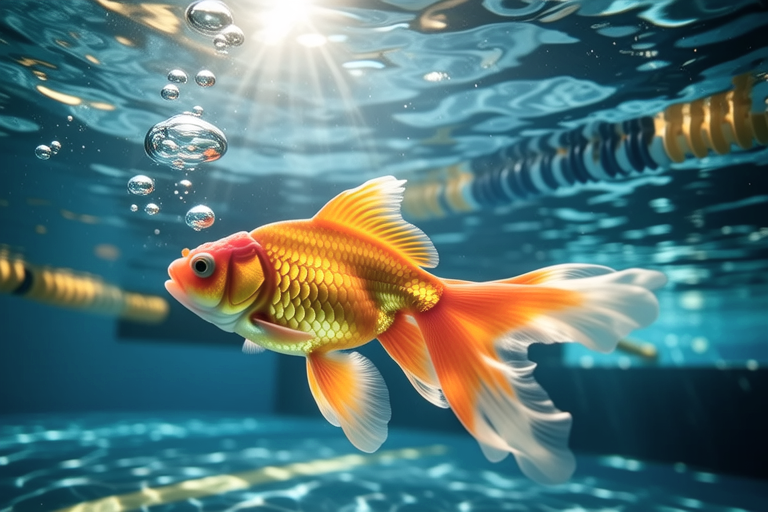
The Underwater Olympics: How Fast Can Your Goldfish Really Swim?
Imagine the Olympics, but instead of track and field athletes, picture sleek, colorful fish darting through water. While it might sound like a whimsical fantasy, the concept of an underwater Olympics isn’t far-fetched when we consider the impressive swimming capabilities of our beloved goldfish. In this article, we will explore the fascinating world of goldfish swimming, comparing their speeds to human Olympic standards, delving into their physiology, and examining the factors that influence their performance.
The Goldfish as Olympic Athletes
Goldfish are often underestimated in terms of their athletic prowess. These small aquatic creatures can swim with surprising agility and speed. To put their abilities into perspective, let’s compare their top swimming speeds to those of human Olympians. While goldfish cannot match the blistering pace of a sprinter like Usain Bolt, they can still achieve impressive velocities relative to their size. The fastest goldfish have been recorded swimming at speeds exceeding one body length per second, which, for a goldfish about 4 inches long, translates to nearly 6 inches per second. This may not seem fast compared to Olympic swimmers, but it’s remarkable for a creature of its size.
Understanding Goldfish Physiology
To appreciate the goldfish’s swimming ability, it’s essential to understand their unique physiology. Goldfish possess a streamlined body shape, which minimizes drag and allows them to move efficiently through the water. Their muscular tail fin provides the primary propulsion, while the pectoral fins assist in steering and maintaining balance. The caudal fin’s powerful undulations create thrust, propelling the goldfish forward with surprising speed.
Additionally, goldfish have a specialized circulatory system that supports their swimming efforts. Their heart pumps oxygenated blood to their muscles, ensuring efficient energy transfer. This system is crucial for sustaining high-speed bursts during feeding or escaping predators. The gills, which extract oxygen from the water, play a vital role in sustaining these bursts of activity.
Factors Affecting Goldfish Speed
Several factors can influence a goldfish’s swimming speed and agility. One of the most significant is the size of the tank. Goldfish require ample space to swim freely and maintain their health. A cramped environment restricts movement and can lead to stress, reducing their overall speed and agility. Ideally, a single goldfish should have at least 20 gallons of water, and additional space is necessary for each additional fish.
Water conditions also play a critical role in determining a goldfish’s swimming ability. Optimal temperature ranges between 68 and 74 degrees Fahrenheit, with pH levels between 6.5 and 7.5. Poor water quality, such as high ammonia or nitrite levels, can impair a goldfish’s health and slow down their swimming. Regular water changes and proper filtration systems are essential to maintaining a healthy aquatic environment.
Breed differences further highlight the variability in goldfish swimming speeds. There are numerous goldfish breeds, each with distinct characteristics that affect their swimming ability. For instance, the Comet Goldfish, known for its long, flowing tail, is one of the fastest goldfish breeds. Its slender body and elongated tail fin provide excellent propulsion, allowing it to reach impressive speeds. On the other hand, fancy goldfish, with their rounded bodies and shorter tails, tend to be slower but more agile in tight spaces.
Comparing Different Breeds of Goldfish
When it comes to comparing different breeds of goldfish, it’s important to consider both speed and agility. As mentioned earlier, the Comet Goldfish is the undisputed champion in terms of speed. Its streamlined body and long tail fin give it the edge in races. However, its agility is somewhat limited due to its elongated form, making it less adept at maneuvering in confined spaces.
In contrast, the Ryukin Goldfish stands out for its impressive combination of speed and agility. With its arched back and slightly raised dorsal fin, the Ryukin can swim quickly while also being highly maneuverable. This makes it a formidable competitor in both speed and agility contests. Another notable breed is the Oranda, characterized by its prominent head growth, called a wen. While the Oranda is slower than the Comet and Ryukin, its robust body and strong swimming muscles allow it to perform well in short bursts.
Tips for Encouraging Healthy Swimming Habits
Owners can take several steps to encourage healthy swimming habits in their goldfish and maintain optimal tank conditions for speed and overall health. First and foremost, ensure your goldfish has enough space to swim freely. A spacious tank not only promotes physical fitness but also reduces stress, leading to better overall health. Additionally, provide plenty of hiding spots and plants to stimulate natural behaviors and encourage exploration.
Maintaining clean water is crucial for promoting healthy swimming. Regularly test the water for ammonia, nitrite, and nitrate levels, and perform partial water changes weekly. Proper filtration systems help keep the water clean and oxygen-rich, supporting the goldfish’s respiratory system. Furthermore, feed your goldfish a balanced diet rich in nutrients to fuel their swimming activities. High-quality flake food, pellets, and occasional live or frozen foods provide the necessary vitamins and minerals for optimal health.
Finally, avoid overcrowding the tank and introduce new fish gradually to prevent stress and competition for resources. By providing a stimulating and supportive environment, you can help your goldfish reach their full potential in speed and agility.
Conclusion
The underwater Olympics may not be a reality, but goldfish certainly deserve recognition for their impressive swimming abilities. From their streamlined bodies and powerful tails to their specialized circulatory systems, these aquatic athletes have much to offer in terms of speed and agility. By understanding the factors that influence their performance and providing optimal tank conditions, owners can help their goldfish thrive and reach their full potential. So, the next time you watch your goldfish dart around the tank, remember that you’re witnessing the beauty of nature’s aquatic Olympians in action.
