From Ocean Depths to Your Curiosity: All About the Pea Crab
The ocean, vast and mysterious, harbors countless secrets and creatures, many of which remain hidden from human eyes. Among these, the pea crab (Pinnotheres) stands out as a fascinating inhabitant of the marine world. This tiny crustacean lives an intriguing life within the gills or mantle cavities of larger marine organisms, such as barnacles and bivalves. This article delves into the unique habitat, physical characteristics, symbiotic relationships, diet, reproduction, and threats to the pea crab, concluding with interesting facts that highlight its importance to marine biodiversity.
A Unique Habitat
Pea crabs are small, typically measuring only a few millimeters to a couple of centimeters in length. Their diminutive size allows them to find shelter within the gill chambers or mantle cavities of their hosts. These hosts can be diverse, ranging from barnacles to scallops and other bivalves. The pea crab’s ability to fit snugly within these spaces ensures protection from predators and harsh environmental conditions. Their hosts provide not just a safe haven but also a means of transportation, enabling the crabs to travel vast distances without expending much energy.
Size, Appearance, and Adaptations
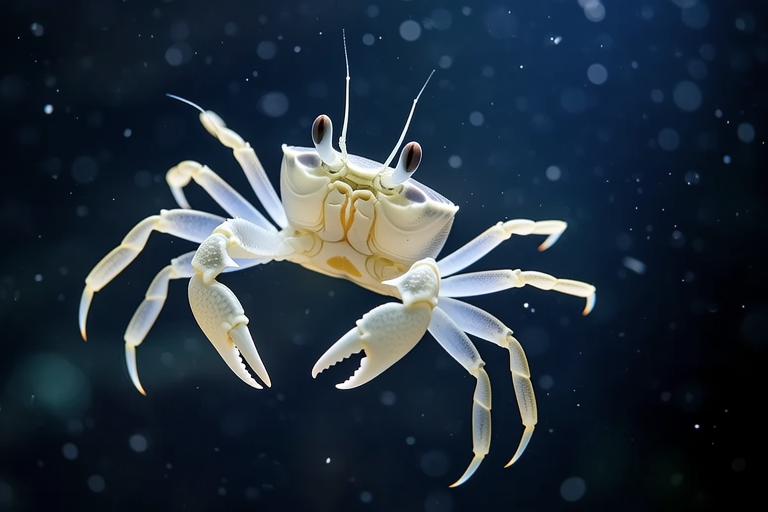
The pea crab’s appearance is quite distinctive, with a flattened body and short legs. Its coloration often matches that of its host, providing camouflage against potential predators. The crab’s exoskeleton is thin and flexible, allowing it to maneuver easily within the tight confines of its host’s cavity. Over time, the pea crab has adapted to its host environment by developing specialized appendages that aid in feeding and maintaining a secure grip within the host’s body. These adaptations include elongated mouthparts and modified legs designed for clinging onto the host’s internal structures.
Symbiotic Relationship
The relationship between the pea crab and its host is primarily commensal, meaning it benefits the crab while having little to no impact on the host. For the pea crab, the host provides shelter, protection, and sometimes even food. In some cases, the pea crab may consume small particles of food filtered by the host, essentially scavenging what remains after the host has fed. However, this relationship can have drawbacks for both parties. The pea crab might occasionally damage the host’s tissues during feeding, leading to potential health issues for the host. On the other hand, the presence of the crab could deter certain parasites or predators from attacking the host, offering a form of mutual benefit.
Diet and Feeding Habits
The diet of the pea crab is primarily composed of detritus, algae, and microorganisms that accumulate within the host’s gill chambers or mantle cavities. They also feed on mucus secreted by their hosts, which can be rich in nutrients. Occasionally, the pea crab may consume smaller organisms that enter the host’s cavity, including copepods and other tiny crustaceans. Despite its small size, the pea crab has developed efficient feeding mechanisms, utilizing its long mouthparts to reach and capture food particles within its confined living space.
Reproduction Process
The reproductive cycle of the pea crab is closely tied to its host’s life cycle. Mating usually occurs within the host’s cavity, ensuring that offspring have immediate access to a protected environment. After mating, the female pea crab carries her eggs under her abdomen until they hatch. Once hatched, the larvae disperse into the surrounding water, where they must find new hosts to continue their development. The success rate of finding a suitable host can vary, depending on factors such as host availability and environmental conditions.
Threats to Survival
Despite their adaptability, pea crabs face several threats to their survival. Pollution, habitat destruction, and overfishing of their hosts all pose significant challenges. Changes in water temperature and chemistry due to climate change can also affect the health and distribution of both the pea crab and its hosts. Additionally, invasive species that compete for resources or prey upon the pea crab can disrupt local ecosystems. Understanding and addressing these threats is crucial for preserving the delicate balance of marine biodiversity.
Interesting Facts
Pea crabs are not only fascinating due to their unique lifestyle but also because of several interesting traits. For instance, they are one of the few species of crabs known to live exclusively within the bodies of other animals. Another intriguing fact is that male and female pea crabs can be found living together within the same host, forming monogamous pairs. Furthermore, the pea crab’s lifespan is relatively short, with most individuals living for less than a year. Despite their brief existence, pea crabs play an important role in their ecosystems by contributing to nutrient cycling and maintaining the health of their hosts.
Why Understanding the Pea Crab is Important
Understanding the pea crab is essential for comprehending the intricate web of marine biodiversity. These tiny creatures serve as indicators of the overall health of their ecosystems. By studying pea crabs and their interactions with hosts, researchers can gain valuable insights into broader ecological processes. Moreover, learning about the pea crab’s adaptations and survival strategies can inspire innovative solutions in fields such as biotechnology and medicine. Ultimately, appreciating the complexity and beauty of the pea crab enriches our knowledge of the ocean’s hidden wonders and underscores the importance of protecting marine environments for future generations.
