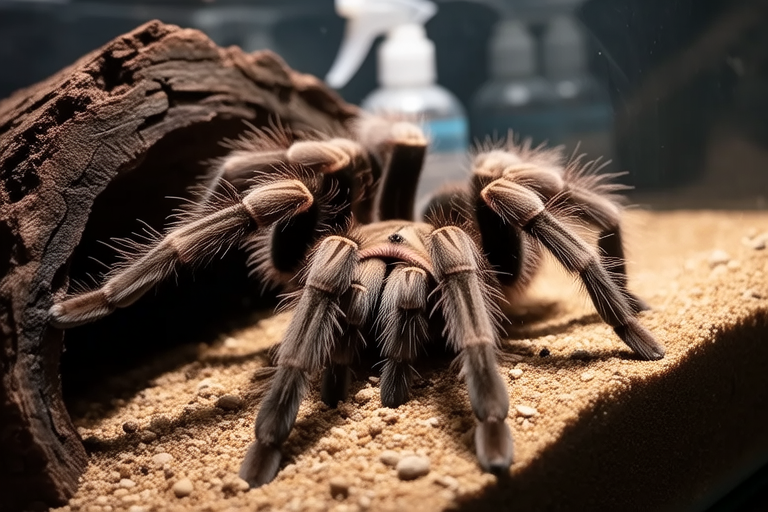
Comprehensive Care Guide for Chilean Rose Tarantulas
Introduction:
The Chilean Rose Tarantula (Grammostola rosea) is one of the most popular tarantulas among hobbyists due to its docile nature and striking appearance. Native to the deserts of Chile, these arachnids are often sought after by beginners and experienced keepers alike. Their vibrant pinkish hue sets them apart, making them a visually appealing addition to any collection. Despite their small size, Chilean Rose Tarantulas require careful attention to their specific needs to ensure they live long, healthy lives.
Housing Requirements:
Tank Size:
Adequate space is crucial for your tarantula’s well-being. A terrarium measuring at least 10 gallons (38 liters) is recommended for an adult Chilean Rose Tarantula. This provides ample room for climbing and burrowing, which are essential behaviors for their physical and mental health.
Substrate Type:
The substrate you choose should mimic their natural habitat. A mix of coconut fiber and sand works well, providing both moisture retention and ease of digging. Ensure the substrate is deep enough for your tarantula to burrow comfortably, typically around 4 inches (10 cm).
Temperature and Humidity Levels:
Maintaining the correct environmental conditions is vital. The ideal temperature range for Chilean Rose Tarantulas is between 75°F and 85°F (24°C to 29°C). Use a thermometer to monitor this closely. Humidity should be kept relatively low, around 60% to 70%, to prevent respiratory problems. A hygrometer will help you maintain optimal humidity levels.
Hiding Spots:
Your tarantula needs a secure place to retreat and feel safe. Provide several hiding spots made from cork bark or half logs. These should be positioned so that they don’t obstruct ventilation or create overly humid areas within the enclosure.
Feeding Habits:
Suitable Prey:
Chilean Rose Tarantulas are carnivorous and feed primarily on insects. Crickets, mealworms, and dubia roaches are excellent choices. Occasionally, small mice can also be offered, but avoid overfeeding as it may lead to obesity.
Frequency:
Feed your tarantula once or twice a week, depending on its size and age. Juveniles may need more frequent meals, while adults can go longer between feedings.
Nutritional Needs:
To ensure proper nutrition, gut-load feeder insects before offering them to your tarantula. This means feeding the insects a nutritious diet rich in vitamins and minerals prior to being fed to your pet. Additionally, dusting the prey with calcium powder can help support healthy exoskeleton development.
Handling Tips and Safety Measures:
Proper Handling:
Handle your tarantula with care, always supporting its abdomen and legs gently. Avoid sudden movements or excessive handling, as this can cause stress.
Safety Measures:
Wear protective gloves when handling to prevent accidental bites or urticating hairs from causing irritation. Keep children and pets away from the enclosure to prevent accidents.
Health Monitoring:
Common Health Issues:
Like all animals, Chilean Rose Tarantulas can suffer from various health issues. Common problems include mites, respiratory infections, and digestive blockages caused by improperly shed skin.
Signs of Illness:
Monitor your tarantula regularly for signs of distress such as lethargy, refusal to eat, or unusual behavior. Changes in coloration or posture may also indicate underlying health issues.
Preventive Care:
Regular cleaning of the enclosure helps prevent bacterial growth and reduces the risk of illness. Quarantine new additions to your collection to avoid introducing parasites or diseases.
Bonding and Enrichment Activities:
Bonding:
While tarantulas are not social creatures, regular gentle handling can help build trust. Spend time near the enclosure to allow your tarantula to become accustomed to your presence.
Enrichment Activities:
Provide climbing structures like branches and artificial plants to stimulate natural behaviors. Rotate these items periodically to keep your tarantula engaged and mentally stimulated.
By following this comprehensive care guide, you’ll be able to provide your Chilean Rose Tarantula with everything it needs to thrive in its new home. Remember, each tarantula is unique, so pay close attention to your pet’s individual needs and preferences.
