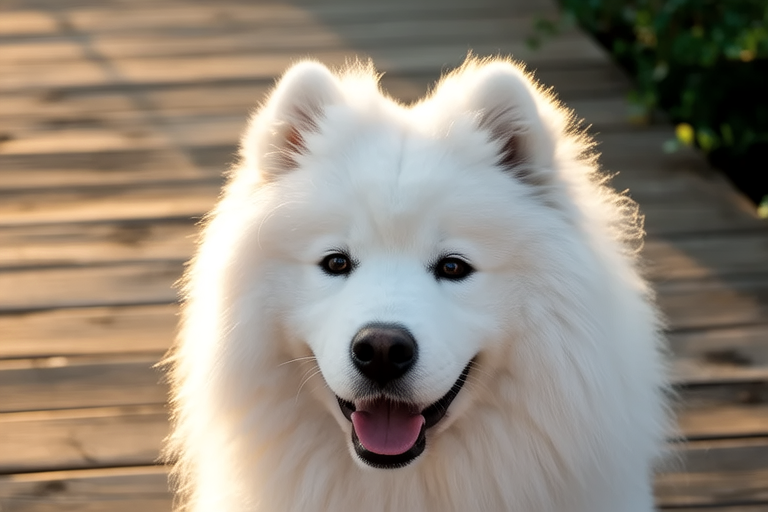
The Samoyed Smile: Unraveling the Mystery Behind Their Famous Grin
The Samoyed, a breed known for its striking white coat and a heartwarming smile, has captured the hearts of many dog enthusiasts around the world. This iconic grin, often referred to as the ‘Sammy smile,’ is one of the most recognizable features of the breed. The Samoyed’s smile is not just a cosmetic trait but also a reflection of its friendly and sociable nature. In this article, we will delve into the mysteries behind the Samoyed smile, exploring its origins, genetic basis, and the impact it has on human-animal relationships.
The Appearance of the Samoyed Smile
At first glance, the Samoyed smile appears to be a simple upturned mouth, but it is much more than that. The smile is created by the positioning of the Samoyed’s lips and the structure of its jaw. Unlike other breeds, the Samoyed’s upper lip is slightly longer than its lower lip, creating the illusion of a perpetual grin. This unique facial structure is further accentuated by the breed’s dark, expressive eyes, which seem to sparkle with joy and warmth. The combination of these features makes the Samoyed smile one of the most captivating expressions in the canine world.
The History and Origins of Samoyeds
The Samoyed breed originated in Siberia, where they were used by the nomadic Samoyede people as sled dogs, herding reindeer, and companions. The harsh Arctic environment shaped the Samoyed’s physical traits, including their thick double coat and the famous smile. The breed’s ancestors needed to withstand extreme cold and work tirelessly, so their bodies evolved to be efficient and resilient. The smile, while charming, is a byproduct of their evolutionary adaptations. It is believed that the smile developed as a result of the breed’s need to conserve heat and maintain a friendly demeanor, essential qualities for survival in a challenging environment.
Genetics Behind the Samoyed Smile
According to Dr. Emily Larson, a canine geneticist at the University of California, Davis, the Samoyed smile is primarily determined by a specific gene mutation. This mutation affects the muscles and ligaments around the dog’s mouth, causing the upper lip to droop slightly, creating the distinctive smile. “The mutation is relatively recent in evolutionary terms,” explains Dr. Larson, “and it has become widespread within the Samoyed breed due to selective breeding.” The mutation does not affect the dog’s health or well-being; rather, it enhances the breed’s appeal and charm.
Behavioral Aspects Linked to the Samoyed Smile
The Samoyed’s smile is more than just a physical trait; it reflects the breed’s friendly and sociable nature. Samoyeds are known for their gentle disposition and love for people, which is evident in their interactions with humans. They are often described as “gentle giants” because of their large size and soft temperament. The smile is a manifestation of their innate friendliness, making them excellent companions for families and individuals alike. Their cheerful demeanor is infectious, and it is no wonder that Samoyeds are often referred to as the “smiling ambassadors” of the canine world.
Anecdotes Highlighting the Charm of Samoyeds’ Smiles
One story that exemplifies the Samoyed’s charm is that of Lucy, a rescue Samoyed who was adopted by a family in New York City. Lucy had been abandoned and was found wandering the streets, emaciated and terrified. Her new owners, a couple with two young children, took her in and nursed her back to health. As Lucy recovered, her smile became a source of comfort and joy for the entire family. The children were particularly drawn to her, and her gentle demeanor helped them overcome their initial fears of dogs. Lucy’s smile became a symbol of hope and healing, a reminder that even in the darkest times, there is always something beautiful to smile about.
Another anecdote involves a Samoyed named Max, who was part of a therapy dog program in a local hospital. Max’s presence and his ever-present smile brought comfort and laughter to patients and staff alike. One elderly patient, who had been bedridden for months, was particularly touched by Max’s visits. “He would sit by my bedside, and his smile would light up the room,” recalls the patient. “It was as if he knew exactly what I needed, and his presence made all the difference.”
The Significance of the Samoyed Smile in Enhancing Human-Animal Bonds
The Samoyed smile plays a crucial role in strengthening the bond between humans and dogs. The breed’s friendly demeanor and the irresistible charm of their smile make them ideal companions for people seeking emotional support and unconditional love. Samoyeds have a unique ability to connect with people on an emotional level, and their smile is a key factor in this connection. Their presence can bring joy and comfort to those who need it most, whether they are children, the elderly, or individuals dealing with stress or trauma.
In conclusion, the Samoyed smile is more than just a physical trait; it is a testament to the breed’s resilience, adaptability, and friendly nature. The smile is a result of centuries of evolution and selective breeding, shaped by the harsh Arctic environment and the needs of the Samoyede people. It is a genetic marvel that has become an integral part of the Samoyed’s identity. The Samoyed’s smile not only enhances their appeal as pets but also strengthens the bond between humans and dogs. Whether it is bringing comfort to a child, offering solace to a patient, or simply brightening someone’s day, the Samoyed smile has the power to touch hearts and change lives.
