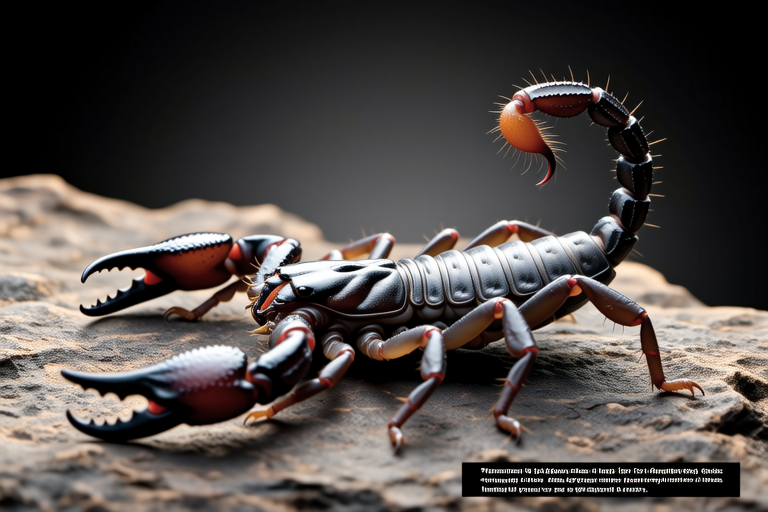
Scorpions Under the Spotlight: An Up-Close Look at Heterometrus Spinifer’s Behavior
Heterometrus spinifer, commonly known as the Indian forest scorpion, is a fascinating arachnid that captivates both amateur enthusiasts and seasoned researchers alike. This article delves into the intricate details of its life, from its physical attributes to its interactions within its environment.
Physical Characteristics
The Heterometrus spinifer boasts a robust exoskeleton, typically measuring between 9 to 13 centimeters in length. Its body is segmented into three main parts: the cephalothorax, the mesosoma, and the metasoma. The cephalothorax houses the eyes and mouthparts, while the mesosoma consists of seven segments, each bearing a pair of spiracles for respiration. The metasoma, or tail, ends with a venomous stinger. One of the most distinctive features of this species is its spiny pectines, which are sensory organs located beneath the abdomen, used for detecting vibrations and chemical cues in the environment.
Natural Habitat
Native to tropical and subtropical regions across India, Sri Lanka, and Southeast Asia, Heterometrus spinifer thrives in dense forests, rocky outcrops, and areas with abundant vegetation. These habitats provide ample shelter and prey, allowing the scorpion to thrive in diverse ecological niches. Their burrowing behavior helps them to avoid predators and extreme weather conditions. The species prefers humid environments, often found near water sources where they can maintain their moisture levels.
Diet
As opportunistic predators, Heterometrus spinifer feeds primarily on insects and other small invertebrates. They employ a sit-and-wait hunting strategy, relying on their keen senses to detect potential prey. Once a target is identified, the scorpion uses its claws to grasp the prey, injecting venom through its stinger to immobilize it. This venom contains neurotoxins that paralyze the victim, making it easier to consume. Despite their fearsome reputation, these scorpions play a crucial role in controlling insect populations within their ecosystems.
Reproduction Methods
The reproductive cycle of Heterometrus spinifer is complex and intriguing. Males engage in a ritualized dance known as ‘promenade à deux’, during which they grasp each other’s pedipalps to establish dominance. After mating, females carry fertilized eggs internally for several months before giving birth to live young. Newborns, numbering around 20 to 40 per litter, remain attached to their mother’s back until they molt for the first time, approximately two weeks later. This extended period of maternal care increases the offspring’s chances of survival in the challenging forest environment.
Defensive Behaviors
When threatened, Heterometrus spinifer employs various defensive tactics. It raises its tail over its back, displaying the stinger prominently as a warning sign. If the threat persists, it may strike with its claws or sting, delivering a potent dose of venom designed to deter predators. However, the toxicity of their venom varies depending on factors like age and diet, affecting its effectiveness against different threats. In captivity, these behaviors highlight the need for careful handling and respect for the animal’s space.
Interaction with Environment
Aside from their predatory roles, Heterometrus spinifer contributes significantly to their ecosystem through bioturbation. By digging burrows, they aerate soil, promoting nutrient cycling and plant growth. Additionally, their nocturnal habits mean they share their habitats with numerous other creatures, forming part of a rich web of interactions that sustain biodiversity.
Unique Traits
One particularly remarkable aspect of Heterometrus spinifer is its ability to glow under ultraviolet light, a phenomenon known as fluorescence. This characteristic likely serves multiple purposes, including communication among individuals and possibly attracting prey. Another unique trait is its adaptability; despite being predominantly terrestrial, they have been observed climbing trees and bushes, expanding their range beyond ground level.
Importance of Studying Scorpions
Understanding species like Heterometrus spinifer is vital for ecological research and conservation efforts. By studying their behaviors and environmental needs, we gain valuable insights into broader ecological processes and the impacts of human activities on natural habitats. Moreover, the study of venom composition could lead to medical advancements, offering new treatments for pain management and neurological disorders.
In conclusion, the Heterometrus spinifer exemplifies the complexity and wonder of nature. Each aspect of its biology—from its physical structure to its interactions within ecosystems—offers a window into the intricate workings of our planet. As we continue to explore these remarkable creatures, we uncover not only fascinating biological phenomena but also deepen our appreciation for the interconnectedness of all life forms.
