From Jungle to Living Room: Captivating Facts About Bengal Cats
Welcome, cat lovers! Today, we’re diving into the world of one of the most fascinating feline breeds out there – the Bengal cat. These stunning creatures have captured the hearts of many with their striking appearance and unique personalities. Let’s explore the history, characteristics, behaviors, and care requirements of these magnificent animals.
The Origin Story
The Bengal cat’s history is as intriguing as its appearance. The breed was developed in the 1960s by crossing domestic cats with Asian leopard cats, a small wild feline native to parts of Asia. Jean Mill, an American breeder, sought to create a cat with the exotic look of a leopard but the temperament of a house cat. Her efforts resulted in the Bengal cat, which has since become one of the most popular domestic breeds.
Distinguishing Characteristics
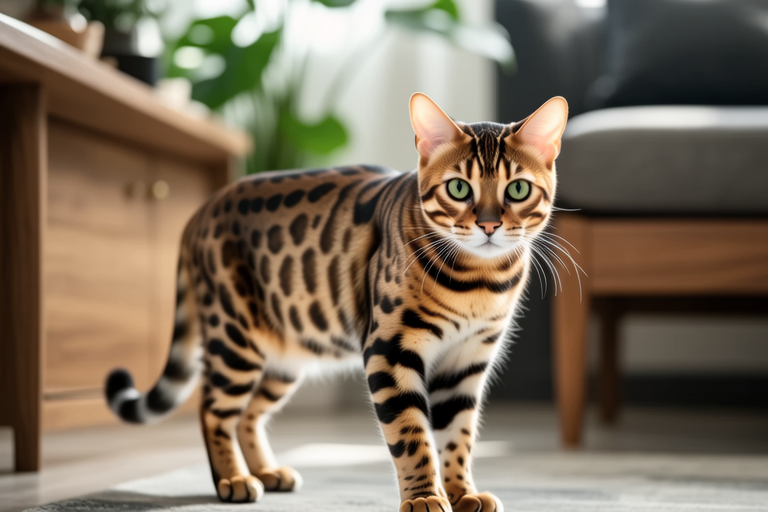
Bengal cats are easily recognizable due to their sleek, muscular bodies and wild-like markings. They have a distinctive coat pattern that resembles that of their wild ancestors, complete with spots, rosettes, and marbling. Their large, expressive eyes and slightly rounded heads add to their charm. Unlike other domestic cats, Bengals are known for their love of water, often playing in it or even swimming.
Coat Patterns and Colors
Bengals come in a variety of coat patterns and colors. The most common are brown tabby and snow leopard, but you can also find silver tabby and melanistic (black) Bengals. Each Bengal cat has its own unique pattern, making them truly one-of-a-kind. The spots and rosettes on their coats are often compared to those found on leopards, giving them a truly wild appearance.
Temperament and Behavior
Bengal cats are known for their playful and energetic nature. They are highly intelligent and enjoy interactive play, often engaging in games that involve toys or puzzles. Bengals are also known for their vocalization; they can be quite talkative and will often chirp or trill when communicating with their humans. Despite their wild ancestry, Bengals are typically very affectionate and enjoy spending time with their owners.
One of the most endearing traits of Bengal cats is their loyalty. They form strong bonds with their human families and are often seen following their owners around the house. This loyalty extends to other pets as well; Bengals can get along well with dogs and other cats if introduced properly. However, due to their active nature, they may not be the best fit for households with small children unless supervised.
Care Requirements
While Bengal cats are generally healthy, they do require some specific care to ensure they live long, happy lives. Regular veterinary check-ups are essential, as are proper nutrition and exercise. Bengals are known for their high activity levels, so providing them with plenty of opportunities to play and explore is crucial. Interactive toys, climbing structures, and puzzle feeders can help keep them mentally and physically stimulated.
Bengals are also known for their grooming habits. While they do shed, their coats are relatively easy to maintain with regular brushing. Bathing your Bengal may be necessary every few months to remove excess oils and dirt from their fur. Be sure to use a gentle shampoo specifically designed for cats and be patient during the process, as Bengals can be somewhat resistant to bathing.
Interesting Facts
Bengal cats have a rich history and many unique traits that set them apart from other domestic breeds. For example, did you know that Bengals are one of the few domestic cats that enjoy water? This trait is believed to stem from their wild ancestors’ need to cool off in rivers and streams. Bengals also have excellent night vision, thanks to their large eyes and reflective layer behind the retina.
Another fascinating fact about Bengal cats is their intelligence. They are known for their problem-solving abilities and can even learn to open doors or cabinets if given enough time and motivation. Bengals are also highly social animals and enjoy being part of the family. They often follow their owners around the house, seeking attention and companionship.
Despite their wild appearance, Bengals are generally safe to have as pets. They are not prone to aggressive behavior and are usually very gentle with their owners. However, it’s important to note that Bengals are still descendants of wild cats, and their instincts can sometimes take over. This means they may be more independent than other domestic breeds and may not always want to cuddle or be petted.
Conclusion
Bengal cats are truly captivating creatures, combining the beauty and grace of their wild ancestors with the affectionate nature of domestic cats. Whether you’re a seasoned cat owner or just starting out, Bengals offer a unique and rewarding experience. With their striking appearance, playful personalities, and loyal natures, it’s no wonder they’ve become one of the most beloved breeds around the world.
If you’re considering adding a Bengal to your family, be sure to do your research and prepare for an active, intelligent, and loving companion. With proper care and attention, your Bengal cat will bring years of joy and companionship to your home. So, why not give this jungle cat a chance to become part of your living room?
