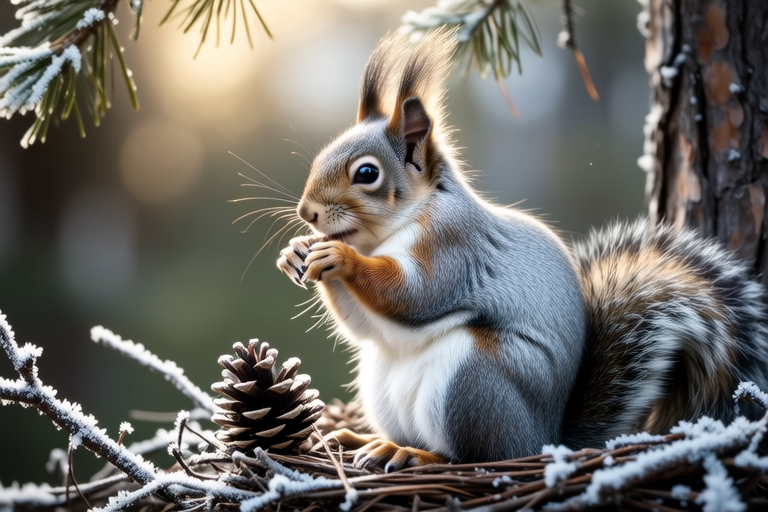
How Squirrels Survive Winter: Nature’s Cold Warriors Unveiled
As winter approaches, many animals face the harsh realities of colder climates, reduced food availability, and the struggle to maintain body heat. Among these creatures, squirrels stand out as nature’s cold warriors, employing a range of behavioral adaptations and physiological changes to thrive through the coldest months. This article delves into the fascinating world of squirrel survival, exploring their food storage strategies, hibernation versus active winter lifestyles, insulation techniques, and navigation of colder climates.
Food Storage Strategies: A Feast Before the Freeze
One of the most remarkable traits of squirrels is their ability to prepare for winter by storing large quantities of food throughout the warmer months. This practice, known as caching, involves burying seeds, nuts, and other edibles in various locations. Scientists estimate that some squirrels can cache thousands of items annually, with each cache containing several seeds or nuts.
Research conducted by the University of California, Davis, reveals that gray squirrels are particularly adept at this practice. They use a combination of visual and spatial memory to locate their caches, even when buried under snow. The process of caching not only ensures a steady supply of food during winter but also aids in seed dispersal, contributing to forest regeneration.
Hibernation vs. Active Winter Lifestyles
Not all squirrels hibernate during winter. While ground squirrels, like the thirteen-lined ground squirrel, enter a state of torpor where their metabolic rate drops significantly, tree squirrels such as the eastern gray squirrel remain active throughout the season. Experts suggest that this difference in strategy is linked to their respective habitats and food sources.
Tree squirrels rely on stored food and occasionally venture out to forage for any remaining nuts or seeds. Their active lifestyle allows them to maintain muscle mass and energy reserves, which are crucial for surviving sudden temperature drops and finding new food sources. In contrast, ground squirrels retreat underground, reducing their need for energy by slowing down their metabolism.
Insulation Techniques: Staying Warm in the Cold
Keeping warm is paramount for squirrels during winter. Their bodies are well-adapted to handle the cold, thanks to several physiological and behavioral adaptations. One key adaptation is the thickening of their fur, which provides excellent insulation against the cold. Additionally, squirrels often line their nests with soft materials such as leaves, moss, and grass to create a cozy, insulated environment.
Studies from the University of Michigan indicate that red squirrels, for example, have been observed building multiple nests within close proximity to one another. These nests serve as backup shelters in case one becomes compromised by predators or extreme weather conditions. Furthermore, squirrels may huddle together in communal nests to share body heat, a behavior that is especially beneficial for smaller species like the American red squirrel.
Navigating Colder Climates: Adaptations for Survival
Squirrels exhibit various behaviors that help them navigate colder climates effectively. For instance, they tend to be more active during the warmer parts of the day, taking advantage of the sun’s rays to raise their body temperature. This behavior is particularly common among ground squirrels, which will often bask in the sunlight before returning to their burrows.
Another adaptation is the ability to reduce water loss. During winter, squirrels conserve water by minimizing urine output and producing concentrated urine. This helps them retain moisture, which is vital for maintaining body temperature and overall health. According to Dr. Joseph Wright, a biologist specializing in mammalian physiology, this adaptation is critical for survival in environments where water sources may be scarce.
Scientific Studies and Expert Opinions
Several scientific studies have provided valuable insights into the survival mechanisms of squirrels. For example, a study published in the journal “Animal Behaviour” explored the caching behavior of eastern gray squirrels. Researchers found that squirrels are capable of recalling the location of their caches with remarkable accuracy, even after several weeks.
Experts also highlight the importance of understanding the ecological role of squirrels in their ecosystems. Dr. Jennifer Verdolin, an animal behaviorist, emphasizes that squirrels play a crucial part in seed dispersal, which contributes to biodiversity and forest regeneration. She notes, “Squirrels are not just survivors; they are essential contributors to the health of our forests.”
Conclusion: Nature’s Cold Warriors
In conclusion, squirrels are true marvels of nature, equipped with a variety of behavioral and physiological adaptations that allow them to survive the harsh winter months. From their strategic food storage to their insulation techniques and active lifestyles, squirrels demonstrate remarkable resilience and adaptability. As we continue to learn more about these creatures, it becomes increasingly clear that they are indeed nature’s cold warriors, playing a vital role in their ecosystems and inspiring admiration for their tenacity and ingenuity.
